Saturday, 18 November 2017

BAUHAUS 5

EL TALLER DE MUEBLES
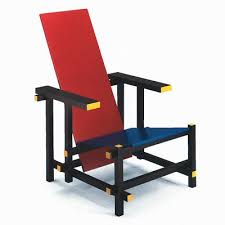
Walter Gropius se hizo cargo en 1921 de la dirección del taller de muebles. El aspecto completamente novedoso de los muebles de la Bauhaus es el resultado del análisis funcional del mismo. Por ejemplo después de estudiar el acto de sentarse se llega a las siguientes exigencias:


a) Asiento y respaldos elásticos.
b) Posición inclinada del asiento.
c) La columna vertebral debe quedar libre.

Las innovaciones que se ejecutaban en todos los muebles importantes se justificaban con análisis de este tipo. La total renuncia a un justificante artístico de la forma corresponde a la ideología de la Bauhaus de esta época, de acuerdo con la cual el arte debía ceder a favor de la artesanía y la técnica. Muchos muebles eran pintados con tonos claros para acentuar su carácter concentró en la producción.

LOS TALLERES DE PINTURA EN VIDRIO Y MURAL

Se instalaron un taller de pintura en vidrio y uno de pintura mural, pero el de vidrio se convirtió en 1924 en parte del taller de pintura mural siendo la causa probable de esto la escasa productividad del mismo. Paul Klee se hizo cargo durante un tiempo de la dirección artística pero no actuó como tal. Los logros más importantes de este taller se deben a Josef Albers que en el segundo semestre de 1923 se hizo cargo tanto de la dirección del mismo como de impartir las clases de taller. Sus primeros cuadros de vidrio realizados aprovechando restos delatan la influencia de Itten y Klee.

Se pueden distinguir tres puntos clave en el trabajo de este taller:

A) Realización de encargos para otros talleres de la Bauhaus.
B) Trabajos sencillos de pintado o planificación de color para edificios.
C) Configuración libre de paredes.

En abril de 1924 Kandinsky presento un plan de trabajo para el taller de pintura mural que abarcaba una gran variedad de ejercicios prácticos y teóricos. Su interés se centraba en la relación entre forma y color. Kandinsky reparte entre los alumnos una encuesta en la que debían relacionar formas y colores básicos. La mayoría se decidió por el orden triángulo−amarillo, círculo−azul, cuadrado−rojo.

LOS TALLERES DE ESCULTURA Y TALLA


Al frente de ambos estaba el maestro artesano Josef Hartwig, que también diseñaba. El maestro de forma de ambos talleres era Schlemmer y en un informe de 1922 relata una falta de perspectiva para ambos talleres sin apenas encargos y sin posibilidades de trabajo en relación con la idea Bauhaus. De hecho el balance de ambos talleres arroja en su mayor parte servicios para el resto de talleres. Por ejemplo se realizaban maquetas en escayola para obras de Gropius: un rascacielos en Chicago y el teatro de Jena. También Itten y Schlemmer mandaban ejecutar allí objetos en escayola, y muchos de los trabajos para el escenario teatral se realizaban allí.

EL TALLER DE ENCUADERNACIÓN

Tanto la impresión como la encuadernación eran asignaturas tradicionales de las escuelas de artes y oficios. El taller de encuadernación era propiedad privada del maestro artesano Otto Dorfner, uno de los más relevantes de Alemania y a el acudían tanto alumnos de la Bauhaus como ajenos a la escuela. Paul Klee se había responsabilizado del curso de forma en el taller pero pronto surgieron diferencias de criterio entre él y el maestro Dorfner y una vez terminado el contrato que unía a este con la Bauhaus, Dorfner expuso su negativa a prolongarlo con lo que la escuela perdió interés en un taller típicamente artesano que no ofrecía la menor posibilidad de modernización.

EL TALLER DE IMPRENTA


Durante el período de Weimar el taller de imprenta estuvo dirigido por Lyonel Feininger como maestro de forma y Carl Zaubitzer como maestro de taller. Al comienzo se enseñaba a los aprendices las técnicas de impresión xilográfica y calcográfica, pero a finales de 1921 cuando Gropius impuso la necesidad de hacer trabajos por encargo esto cambió. Fue entonces cuando surgió la idea para la elaboración de un cartapacio en cinco entregas que incluía a los maestro de la Bauhaus, artistas italianos, rusos y maestros alemanes. El taller siempre tenia encargos para hacer e incluso artistas ajenos a la Bauhaus imprimían en el sus trabajos. En 1923 se puso en pie una editorial que publicó el cartapacio de maestros y el libro para la exposición de 1923 pero aun así no pudo mantenerse durante mucho tiempo.

THE WORKSHOP OF FURNITURE

Walter Gropius took charge in 1921 of the direction of the workshop of furniture. The completely novel aspect of the furniture of the Bauhaus is the result of the functional analysis of the same one. For example after studying the act of sitting down goes over to the following requirements:

a) Seat and flexible supports.
b) Sloping position of the seat.
c) The spine must remain free.

The innovations that were executed in all the important furniture were apologizing to analysis of this type. The entire resignation to an artistic written proof of the form corresponds to the ideology of the Bauhaus of this epoch, in accordance with which the art had to yield in favor of the craft and the skill. Many furniture were painted by clear tones to accentuate its character it concentrated in the production.

THE WORKSHOPS OF PAINTING IN GLASS AND MURAL

They installed a painting workshop to themselves in glass and one of wall painting, but that of glass turned in 1924 in part of the workshop of wall painting being the probable cause of this the scarce productivity of the same one. Paul Klee took charge during a time of the artistic direction but it did not act as as such. The most important achievements of this workshop owe to themselves Josef Albers who in the second semester of 1923 took charge so much of the direction of the same one as of giving the classes of workshop. Its first realized glass pictures making use of remains denounce the influence of Itten and Klee.

Three key points can differ in the work of this workshop:

A) Orders achievement for other workshops of the Bauhaus.
B) Simple works of painting or planning of color for buildings.
C) Free walls configuration.

In April, 1924 Kandinsky presented a work plan for the workshop of wall painting that was including a big variety of practical and theoretical exercises. Its interest was centring on the relation between form and color. Kandinsky distributes between the pupils a survey in which they had to relate forms and basic colors. The majority was decided by the order yellow triangle, blue circle, red square.

THE WORKSHOPS OF SCULPTURE AND SIZE


At the head of both there was the main craftsman Josef Hartwig, who also was designing. The teacher of form of both workshops was Schlemmer and in a report of 1922 he reports an absence of perspective for both workshops without scarcely orders and without possibilities of work as regards the idea Bauhaus. In fact the balance of both workshops throws in most cases services for the rest of workshops. For example mock-ups were realized in cast for works of Gropius: a skyscraper in Chicago and the theater of Jena. Also Itten and Schlemmer were ordering to execute there objects in cast, and many of the works for the theatrical stage were realized there.

THE WORKSHOP OF BINDING


Both the impression and the binding were traditional subjects of the schools of arts and crafts. The binding workshop was a private ownership of the main craftsman Otto Dorfner, one of the most excellent of Germany and to the acudían so much pupils of the Bauhaus as foreign to the school. Paul Klee had taken responsibility of the form course in the workshop but soon they arose you differ from criterion between he and the teacher Dorfner and as soon as there was finished the contract that was joining this one with the Bauhaus, Dorfner exhibited its denial to prolong it with what the school lost interest in a workshop typically craftsman who was not offering the least possibility of modernization.

THE PRINTING WORKSHOP

During the period of Weimar the printing workshop was directed by Lyonel Feininger like teacher of form and Carl Zaubitzer like teacher of workshop. To the beginning the impression skills were taught to the beginners xilográfica and calcográfica, but at the end of 1921 when Gropius imposed the need to do works for order this it changed. 

It was then when the idea arose for the making of a folder in five deliveries that it was including to the teacher of the Bauhaus, German Italian, Russian and main artists. The workshop always had orders to do and even artists foreign to the Bauhaus were printing in its works. In 1923 there stood up a publishing house that the teachers' folder and the book published for the exhibition of 1923 but nevertheless it could not be supported for the long time.


Sunday, 22 October 2017

BAUHAUS 4

MOHOLY−NAGY

MOHOLY NAGY
Como consecuencia de estos nuevos objetivos, en ese mismo año, quien reemplazó a Itten como director del curso preliminar fue el constructivista húngaro Moholy−Nagy. Experimentador incansable, Moholy−Nagy exploró la pintura, la fotografía, la película cinematográfica, la escultura y el diseño gráfico. 

El uso de materiales nuevos como el plexiglás, las técnicas innovadoras como el foto montaje y el fotograma, así como medios visuales, incluso el movimiento cinético, la luz y la transparencia fueron abarcados por este pensador extraordinario. 

Joven y claro al hablar, la presencia de Moholy−Nagy en la facultad tuvo una marcada influencia en la evolución de la enseñanza y la filosofía de la Bauhaus, ya que el director pugnaba por una unidad nueva entre el arte y la tecnología. La pasión de Moholy−Nagy por la tipografía y la fotografía inspiraron el interés de la Bauhaus en la comunicación visual y la condujeron a realizar experimentos importantes en la unidad de la tipografía y la fotografía. Moholy−Nagy veía el diseño gráfico, especialmente al cartel, evolucionar hacía la tipografía. 

A esta integración objetivo de la palabra y la imagen, para comunicar un mensaje con independencia absoluta, la llamó nueva literatura visual.

El nombramiento de Moholy así como las reformas llevadas a cabo en los planes de estudio (el curso preparatorio pasa a durar un año en vez de seis meses y las clases de Klee y Kandinsky así como la enseñanza de la forma pasan a formar parte de la educación artística básica) dan inicio a una nueva etapa en la historia de la Bauhaus.

LAS CLASES DE PAUL KLEE

A pesar de que Paul Klee carecía de experiencia didáctica y prácticamente había aprendido todos sus conocimientos de forma autodidacta, aceptó dar clases en la Bauhaus como una oportunidad para cambiar su técnica, el estilo y el contenido de su arte y al mismo tiempo desarrollar una didáctica del arte que se ajustara a la clase de forma. 

Klee transformó el aprendizaje de la forma en un aprendizaje pictórico de la forma utilizando para ello la pintura sobre madera para al año siguiente tocar el aprendizaje del color utilizando para ello sobre todo sus primeros cuadros. 

El propio Klee describía su clase así: "Veo mi tarea aquí desde el principio, y a medida que pasa el tiempo la entiendo mejor: la transmisión de mi experiencia traducida en formas ideales (pintando y dibujando), experiencia que gira en torno a la construcción de lo unitario partiendo de la multiplicidad. 

Transmito esta experiencia en parte mediante síntesis (es decir, muestro mis trabajos), en parte mediante análisis (o sea, descompongo los cuadros en sus partes esenciales)". Al mismo tiempo Klee se esforzaba en distanciarse del método de Itten que apuntaba a una iniciación espontanea de la creación artística.

W. KANDINSKY
LAS CLASES DE WASSILY KANDINSKY

Kandinsky comenzó a trabajar en la Bauhaus a mediados de 1922 y tomó a su cargo el taller de pintura mural así como una clase de Morfología del Color. Al igual que Klee, Kandinsky desarrolló sistemáticamente sus clases partiendo también de la síntesis y el análisis. En 1912 en su libro Sobre lo espiritual en el arte.

Kandinsky ya se había ocupado del carácter de determinados colores y cómo el aprendizaje del color había tenido un papel secundario en las clases de Itten , el anuncio de su curso de color vino a llenar un hueco importante. artiendo de los colores rojo−amarillo−azul y las formas círculo−triángulo−cuadrado, Klee estudio la interacción de las formas y el color. 

Asimismo a través del dibujo analítico invitaba a sus alumnos a descubrir las líneas principales y la tensión compositiva de una naturaleza muerta hasta obtener la estructura coherente de un cuadro abstracto. Este dibujo analítico se ha de entender como una especie de sistematización de sus años de lucha por la pintura abstracta.

EL TALLER DE CERÁMICA

En el curso de 1920 la Bauhaus entró en contacto con el maestro alfarero Max Krehan un artesano establecido a treinta kilómetros de Weimar y dispuesto a colaborar con la escuela. Cinco estudiantes se comprometieron a trabajar y a alojarse allí durante dos años. Los alumnos se proveían de los materiales en el bosque y aprendían todo lo relativo al oficio. 

En 1923 y ante la decisión de convertir en productivos a todos los talleres de la escuela, el taller de Krehan pasó a formar parte de la Bauhaus y se pasaba a la creación en serie, con algunas voces en contra como la del maestro Krehan, pero aunque se amplió la capacidad y se racionalizaron los procesos productivos, la falta de material, de espacio y de un horno adecuado, llevaron a la desaparición del taller.

EL TALLER TEXTIL


GUNTA STOLZL
Fue el destino de muchas de las mujeres que acudieron a la Bauhaus. Hombres y mujeres veían las labores textiles como una actividad inherente a la mujer, arrastrando con ello una división sexista del trabajo que venía del siglo XIX. Georg Muche se hizo cargo de este taller y aunque aconsejaba a las alumnas en la decisión de que diseño hacer, las daba una gran autonomía. Este taller colaboraba especialmente con el de carpintería y al igual que los demás, combinó su actividad educativa con la producción comercial. 

Las alumnas tenían que adquirir algunos de los conocimientos técnicos fuera de la Bauhaus y dos de las mejores Gunta Stölzl y Benita Koch Otte asistieron a diversos cursos de tinte y ligamentos que más tarde difundieron en la escuela. Las novedades estilísticas del taller llegaban de la clase de historia del arte, así era que primero Itten y más tarde Klee determinaban la producción textil llegando a componer los tapices como si se trataran de cuadros abstractos.


MOHOLY−NAGY

As a result of these new targets, in the same year, it was the Hungarian constructivista Moholy−Nagy who replaced Itten as the director of the preliminary course. Tireless experimenter, Moholy−Nagy explored the painting, the photo, the cinematographic movie, the sculpture and the graphic design. The use of new materials like the Plexiglas, the innovative skills as the photo assembly and the still, as well as visual means, the kinetic movement, the light and the transparence were even included by this extraordinary thinker. 

Young and clear, on having spoken, the presence of Moholy−Nagy in the faculty had pronounced influence in the evolution of the education and the philosophy of the Bauhaus, since the director was fighting for a new unit between the art and the technology. The Moholy−Nagy passion for the typography and the photo they inspired the interest of the Bauhaus in the visual communication and led her to realize important experiments in the unit of the typography and the photo. 

Moholy−Nagy saw the graphic design, to the cartel, evolving especially was doing the typography. Target of the word and the image, to communicate a message with absolute independence, called it to this integration a new visual literature.

The appointment of Moholy as well as the reforms carried out in the plans of study (the preparatory course happens to last one year instead of six months and the classes of Klee and Kandinsky as well as the education of the form happen to be part of the basic art education) they give beginning to a new stage in the history of the Bauhaus.

THE CLASSES OF PAUL KLEE

Although Paul Klee was lacking didactic experience and practically he had learned all its knowledge of self-educated form, he accepted to teach in the Bauhaus as an opportunity to change its skill, the style and the content of its art and at the same time to develop a didactics of the art that was fitting to the class of form. 

Klee transformed learning of the form into pictorial learning of the form using for it the painting on wood for on the following year to touch learning of the color using for it especially its first pictures. 

The proper Klee was describing its class like that: "I see my task here from the beginning, and as the time happens I understand it better: the transmission of my experience translated in ideal forms (doing and drawing), experience that turns concerning the construction of the unitary thing departing from the multiplicity. 

I transmit this experience partly by means of synthesis (that is to say, I show my works), partly by means of analysis (or, I decompose the pictures in its essential parts)". At the same time Klee was straining in drifting apart from the method of Itten that was pointing at a spontaneous beginning of the artistic creation.

THE CLASSES OF WASSILY KANDINSKY

Kandinsky began to be employed at the Bauhaus in the middle of 1922 and took to its charge the workshop of wall painting as well as a class of Morphology of the Color. As Klee, Kandinsky developed systematically its classes departing also from the synthesis and the analysis. In 1912 in its book On the spiritual thing in the art.

Kandinsky had already dealt with the character of certain colors and how learning of the color had had a secondary role in the classes of Itten, the announcement of its course of color came to fill an important hollow. artiendo of the colors rojo−amarillo−azul and the forms círculo−triángulo−cuadrado, Klee studied the interaction of the forms and the color. 

Also across the analytical drawing he was inviting its pupils to discover the main lines and the tension compositiva of a still life up to obtaining the coherent structure of an abstract picture. This analytical drawing has to be understood like a species of systematization of its years of struggle by the abstract painting.

THE WORKSHOP OF CERAMICS

MAX KREHAN
During 1920 the Bauhaus there contacted the main potter Max Krehan a craftsman established to thirty kilometers of Weimar and ready to collaborate with the school. Five students promised to work and to stay there for two years. 

The pupils were provided with the materials in the forest and were learning everything relative to the office. In 1923 and before the decision to turn in productive to all the workshops of the school, the Krehan workshop happened to be part of the Bauhaus and it was passing to the creation in series, with some voices in against as that of the teacher Krehan, but although the capacity was extended and there were rationalized the productive processes, the absence of material, of space and of a suitable stove, led to the disappearance of the workshop.

THE TEXTILE WORKSHOP

It was the destination of many of the women who came to the Bauhaus. Men and women saw the textile works like an activity inherent in the woman, dragging with it a sexist division of the work that was coming of the XIXth century. 

Georg Muche took charge of this workshop and although he was
BENITA KOCH
advising to the pupils in the decision of that I design to do, a big autonomy was giving them. This workshop was collaborating especially with that of carpentry and as the others, it combined its educational activity with the commercial production. 

The pupils had to acquire some of the technical knowledge out of the Bauhaus and two of the best Gunta Stölzl and Benita Koch Otte they were present at diverse courses of dye and ligaments that later they spread in the school. 

The stylistic innovations of the workshop were coming from the class of art history, this way the fact was that the first Itten and later Klee was determining the textile production going so far as to compose the carpets as if they were talking each other of abstract pictures.


Sunday, 1 October 2017

BAUHAUS 3

CLASES DE ARQUITECTURA Y URBANIZACIÓN

ADOLF MEYER
Si bien Gropius se había esforzado durante tiempo en conseguir una sección de arquitectura en la Bauhaus distintas trabas burocráticas se oponían a su proyecto, hasta que en mayo de 1920 pudo concretarse, aunque no de forma sistemática, bajo la dirección de Adolf Meyer. En 1923, con motivo de la primera gran exposición de la Bauhaus, se expusieron maquetas de colonias y casas modelo pero fue un encargo privado del contratista Adolf Sommerfeld que encargo a Gropius la construcción de una casa de madera de teca el que brindo a este la posibilidad de apoyar económicamente a la Bauhaus mediante la contratación de obras y de formar el primer taller comunitario. 

La Casa Sommerfeld fue el primer gran proyecto en común de la Bauhaus y el ejemplo más hermoso de crear una obra de arte unitaria. La decoración exterior e interior esta inseparablemente unida al edificio que evidencia, al lado de las formas expresionistas, la influencia de las casas de la pradera que construía el arquitecto americano Frank Lloyd Wright.

EL CONFLICTO GROPIUS − ITTEN


La ejecución del primer proyecto de envergadura de la Bauhaus provocó el enfrentamiento entre Gropius e Itten. Itten no era partidario de buscar el contacto con la industria y rechazaba los encargos por principio mientras que Gropius los veía como una parte importante que ayudaba al sostenimiento de la escuela y por ello no cejaba en el empeño de buscar posibles clientes. 

Así en abril de 1923 Itten abandona la Bauhaus y se traslada a dar clases a un centro de la secta Mazdaznan en Herrliberg dejando expedito el camino para un nuevo concepto de educación en cuyo centro no se encuentra ya el individuo sino el logro de nuevos productos industriales. 

La consecuencia de esta decisión fue el paulatino abandono de la artesanía y el cambio de rumbo de la filosofía expresionista de la Bauhaus en busca de su unión con la tecnología y la industria.

LA INFLUENCIA DE DE STIJL


El artista holandes Theo van Doesburg fue el impulsor definitivo del abandono de las posturas expresionistas en la Bauhaus. 


Fundador del movimiento De Stijl junto con el pintor Piet Mondrian, siguió con interes el trabajo desarrollado en la Bauhaus y en abril de 1921 se estableció en Weimar esperando obtener una plaza como profesor y donde impartió un curso de De Stijl. 

Él deseaba dar clases, pero Gropius sintió que Van Doesburg era demasiado dogmático al insistir en una geometría estricta y un estilo impersonal. Pensaba evitar enérgicamente la creación de un estilo Bauhaus o la imposición de un estilo a los estudiantes. Incluso como extranjero Van Doesburg causó un fuerte impacto en la Bauhaus por permitir que su casa se convirtiera en un lugar de reunión para estudiantes y profesores de la Bauhaus, así como por enseñar los principios De Stijl. 

Las áreas del diseño de mobiliario y la tipografía fueron especialmente influenciadas por la corriente De Stijl. Los 3 alumnos de la Bauhaus pronto se entusiasmaron con la personalidad de Theo y su curso fue un éxito además de que su estancia en Weimar benefició, sin lugar a dudas, el proceso de desarrollo de la escuela.

T. VAN DOESBURG
Si bien Doesburg en la correspondencia que intercambió con los rectores de la Bauhaus criticaba la falta de un "principio general" en esa época Gropius ya andaba buscando un denominador común y los diseños claramente constructivistas De Stijl aceleraron el viraje de la Bauhaus hacia un estilo nuevo. 

¿Qué fue lo que originó este cambio?. En primer lugar el papel de la artesanía en la empobrecida Alemania de posguerra y en segundo la idea de Gropius de que la escuela debía ser productiva para asegurar la independencia económica del Estado. Ni que decir tiene que este cambio de orientación fue de vital importancia en la historia de la Bauhaus. La escuela se propuso la creación de formas adecuadas a la industria y a la época algo que hasta el momento no despertaba mucho interés.

CLASSES OF ARCHITECTURE AND URBAN DEVELOPMENT

Although Gropius had strained during time in obtaining an architecture section in the different Bauhaus bureaucratic hobbles were opposed to its project, until in May, 1920 it could materialize, although not of systematical form, under the guidance of Adolf Meyer. 

In 1923, owing to the first big exhibition of the Bauhaus, there were exhibited mock-ups of colonies and houses I shape but it was an order deprived of the contractor Adolf Sommerfeld who entrusted to Gropius the construction of a wooden house of teak the one that offered to this one the possibility of supporting economically the Bauhaus by means of the works hiring and of forming the first community workshop. 


The House Sommerfeld was the first big project together of the Bauhaus and the most beautiful example of creating a unitary work of art. The exterior and interior decoration is joined inseparably to the building that it demonstrates, next to the forms expressionists, the influence of the houses of the prairie that the American architect Frank Lloyd Wright was constructing.

THE CONFLICT GROPIUS − ITTEN

The execution of the first important project of the Bauhaus provoked the clash between Gropius and Itten. Itten was not a supporter of looking for the contact with the industry and he was pushing the orders back for beginning while Gropius saw them like an important part that it was helping to the support of the school and for it he was not moving back in the determination to look possible clients. 


This way in April, 1923 Itten leaves the Bauhaus and moves to teach to a center of the sect Mazdaznan in Herrliberg making the way speedy for a new education concept in whose center is not already found by the individual but the achievement of new industrial products. The consequence of this decision was the gradual abandonment of the craft and the change of course of the philosophy expressionist of the Bauhaus in search of its union with the technology and the industry.

THE INFLUENCE OF OF STIJL

The Dutch artist Theo van Doesburg was the definitive promoter of the abandonment of the positions expressionists in the Bauhaus. Founder of the movement Of Stijl together with the painter Piet Mondrian, continued with interest that the work developed in the Bauhaus and in April, 1921 was established in Weimar hoping to obtain a square as teacher and where it gave a course of Of Stijl. 

He wanted to teach, but Gropius felt that They Go Doesburg was too dogmatic on having insisted on a strict geometry and an impersonal style. He was thinking to avoid energetically the creation of a style Bauhaus or the imposition of a style to the students. Enclosed like foreigner Van Doesburg it caused a strong impact in the Bauhaus for allowing its house to turn into a meeting place for students and teachers of the Bauhaus, as well as for teaching the beginning Of Stijl. 

The areas of the design of furniture and the typography were influenced especially by the current Of Stijl. 3 pupils of the Bauhaus soon got enthusiastic with Theo's personality and its course was a success in addition to which its stay in Weimar benefited, undoubtedly, the process of development of the school.

Although Doesburg in the mail that he exchanged with the rectors of the Bauhaus was criticizing the absence of a "general beginning" in this epoch Gropius was already walking looking for a common denominator and the designs clearly constructivistas Of Stijl accelerated the turn of the Bauhaus towards a new style. 

What was what caused this change?. First of all the role of the craft in the impoverished postwar period Germany and in second the idea of Gropius of to that the school had to be productive to assure the economic independence of the State. Not that to say has that this change of orientation was of vital importance in the history of the Bauhaus. The school proposed to itself the creation of forms adapted to the industry and to the epoch something that until now was not waking up a lot of interest.

Saturday, 9 September 2017

BAUHAUS 2

LOS PROFESORES

GROPIUS
La idea de Gropius era la de que los profesores que impartieran las materias fueran de reconocido prestigio y los primeros que se incorporaron al proyecto fueron el pintor y docente Johannes Itten, el pintor Lyonel Feininger y el escultor Gerhard Marcks. Itten llegó a ser el más influyente ya que fue el que desarrolló el curso preparatorio y el centro del proyecto pedagógico de la Bauhaus. En el año 1919 y por deseo de Itten se incorporó al cuadro de profesores el pintor expresionista Georg Muche. Paul Klee y Oskar Schlemmer entraron a formar parte del profesorado de la escuela en 1921 así como Lothar Schreyer que se encargaría del taller de teatro. 
GEORGE MUCHE

En 1922 Wassily Kandinsky que estaba considerado como el máximo representante de la pintura abstracta fue invitado por el Consejo de maestros a unirse al proyecto y así, en un plazo de tres años Gropius reunió a un elenco de artistas de vanguardia con el propósito de que el arte volviera a formar parte de la vida cotidiana.


LAS CLASES DE JOHANNES ITTEN

Johannes Itten fue el personaje central de la primera época de la Bauhaus, provenía de la enseñanza privada e impresionó profundamente a Gropius que le invitó a dar una conferencia en el acto de inauguración de la escuela para pasar poco después a formar parte del cuadro de profesores. Su método pedagógico se basaba en los pares de opuestos: intuición y método; vivencia subjetiva y reconocimiento objetivo. La búsqueda de ritmo y su creación armónica ocupaban la parte central de sus clases que se orientaban en torno a tres premisas: los bocetos de la naturaleza y la materia; el análisis de viejos maestros y la clase de desnudo. 

JOHANNES ITTEN
En la realización de bocetos Itten buscaba que los alumnos expresaran la esencia y contradicciones de los elemento. Asimismo incluía la enseñanza del contraste, la forma y el color. Los contrastes se articulaban también a través de pares de opuestos, respecto a las formas se comenzaba con el estudio de las figuras elementales (círculo, cuadrado, triángulo) y la relación entre estas y los colores jugó un destacado papel en los años posteriores a través de las clases de Paul Klee y Wassily Kandinsky.

En el análisis de los viejos maestros se intentaba buscar las líneas principales, las curvas, el movimiento, el ritmo del cuadro o su construcción intentando liberar lo esencial de entre el complicado todo. 

Y en lo referente al estudio del desnudo señalar que el objetivo era también encontrar el ritmo interno de la figura humana. La diferencia radical entre el curso introductorio de Itten y los que se impartían en las academias clásicas de artes y oficios, era que en estas los alumnos copiaban objetos y por el contrario Itten enseñaba leyes del color, ritmo y forma de la composición que ayudaban a que el alumno desarrollara su propia sensibilidad artística.

Profundamente respetado por sus alumnos, solía vestirse con un traje "Bauhaus" que el mismo había diseñado y partidario de la enseñanza Mazdaznan (muy extendida en Alemania y que propugnaba una alimentación vegetariana, ejercicios respiratorios, y ayunos entre otras cosas) se rodeó en la escuela de un grupo fiel de seguidores, entre los que se encontraba el pintor Georg Muche, con los que ponía en práctica su ideario.

LOS TALLERES

OSKAR SCHELEMMER
Con las dificultades propias del tiempo de posguerra los talleres planeados por Gropius iban poco a poco tomando forma. El taller de encuadernación era propiedad del maestro encuadernador Otto Dorfner y el de telares de Helene Börner que cerraron tratos con la escuela para enseñar a los aprendices y aunque al principio los estudiantes podían practicar inmediatamente en los talleres, el alto consumo de material llevo al Consejo de Maestros a tomar la decisión, a partir de octubre de 1920, de instaurar como obligatorio el semestre preparatorio de Itten y solamente quien hubiera superado este curso podía continuar en la escuela. 

Asimismo tomaron la decisión de dotar a cada taller con un maestro de forma de manera que cada alumno podría acudir a dos personas: el maestro de forma y el de artesanía. De esta forma las clases paralelas con un artista y un artesano proporcionaban al alumno una enseñanza más completa.

Si bien al principio casi todos los talleres se encontraban bajo la influencia de Itten, poco después cedió el de escultura a Schlemmer, el textil a Muche, el de encuadernación a Klee y el de carpintería a Gropius. Solamente permanecieron a cargo de Itten los de metal, pintura mural y en vidrio quien poco a poco y con cada cambio organizativo iba perdiendo influencia


THE TEACHERS

LOTHAR SCHEREDER
The idea of Gropius was that of that the teachers who were giving the matters were of recognized prestige and the first ones that joined to the project were the painter and teaching Johannes Itten, the painter Lyonel Feininger and sculptor Gerhard Marcks. Itten became the most influential since it was the one that developed the preparatory course and the center of the pedagogic project of the Bauhaus. In the year 1919 and for Itten desire there joined to the teachers' picture the painter expressionist Georg Muche. 


Paul Klee and Oskar Schlemmer began to be part of the professorship of the school in 1921 as well as Lothar Schreyer who would take charge of the theater workshop. In 1922 Wassily Kandinsky who was considered to be the maximum representative of the abstract painting that it was invited by the Council of teachers to join the project and this way, within a period of three years Gropius assembled to an artists' avant-garde cast with the intention of which the art was part of the everyday life again.

THE CLASSES OF JOHANNES ITTEN

Johannes Itten was the central personage of the first epoch of the Bauhaus, it was coming from the private education and it impressed deeply Gropius that invited him to give a conference at once of opening of the school to happen soon to be part of the teachers' picture. Its pedagogic method was based on the pairs of put up: intuition and method; subjective experience and objective recognition. The search of rhythm and its harmonic creation were occupying the central part of its classes that were faced concerning three premises: the sketches of the nature and the matter; the analysis of old teachers and the class of nude.

PAUL KLEE
In the achievement of sketches Itten he was looking that the pupils were expressing the extract and contradictions of the element. Also it was including the education of the contrast, the form and the color. The contrasts were articulated also across pairs of put up, with regard to the forms it was begun by the study of the elementary figures (circle, square, triangle) and the relation between these and the colors it played an out-standing role in the later years across the classes of Paul Klee y Wassily Kandinsky.

In the analysis of the old teachers one was trying to look for the main lines, the curves, the movement, the rhythm of the picture or its construction trying to liberate the essential thing of between the complicated one everything. And as for the study of the nude to point out that the target was also to find the internal rhythm of the human figure. 

The radical difference between the introductory course of Itten and those who were given in the classic arts and crafts academies, was that in these the pupils were copying objects and on the contrary Itten was teaching laws of the color, rhythm and form of the composition that they were helping to that the pupil was developing his own artistic sensibility.

Deeply respected by its pupils, he usually dressed himself in a suit "Bauhaus" that the same one had designed and partial to education Mazdaznan (much extended in Germany and that was supporting a vegetarian feeding, respiratory exercises, and fastings between other things) it surrounded itself in the school of a faithful group of followers, between whom the painter Georg Muche was, with that it was putting into practice its ideology.

Art Black Side