Showing posts with label Diseño. Show all posts

Sunday, 1 October 2017

BAUHAUS 3

CLASES DE ARQUITECTURA Y URBANIZACIÓN

ADOLF MEYER
Si bien Gropius se había esforzado durante tiempo en conseguir una sección de arquitectura en la Bauhaus distintas trabas burocráticas se oponían a su proyecto, hasta que en mayo de 1920 pudo concretarse, aunque no de forma sistemática, bajo la dirección de Adolf Meyer. En 1923, con motivo de la primera gran exposición de la Bauhaus, se expusieron maquetas de colonias y casas modelo pero fue un encargo privado del contratista Adolf Sommerfeld que encargo a Gropius la construcción de una casa de madera de teca el que brindo a este la posibilidad de apoyar económicamente a la Bauhaus mediante la contratación de obras y de formar el primer taller comunitario. 

La Casa Sommerfeld fue el primer gran proyecto en común de la Bauhaus y el ejemplo más hermoso de crear una obra de arte unitaria. La decoración exterior e interior esta inseparablemente unida al edificio que evidencia, al lado de las formas expresionistas, la influencia de las casas de la pradera que construía el arquitecto americano Frank Lloyd Wright.

EL CONFLICTO GROPIUS − ITTEN


La ejecución del primer proyecto de envergadura de la Bauhaus provocó el enfrentamiento entre Gropius e Itten. Itten no era partidario de buscar el contacto con la industria y rechazaba los encargos por principio mientras que Gropius los veía como una parte importante que ayudaba al sostenimiento de la escuela y por ello no cejaba en el empeño de buscar posibles clientes. 

Así en abril de 1923 Itten abandona la Bauhaus y se traslada a dar clases a un centro de la secta Mazdaznan en Herrliberg dejando expedito el camino para un nuevo concepto de educación en cuyo centro no se encuentra ya el individuo sino el logro de nuevos productos industriales. 

La consecuencia de esta decisión fue el paulatino abandono de la artesanía y el cambio de rumbo de la filosofía expresionista de la Bauhaus en busca de su unión con la tecnología y la industria.

LA INFLUENCIA DE DE STIJL


El artista holandes Theo van Doesburg fue el impulsor definitivo del abandono de las posturas expresionistas en la Bauhaus. 


Fundador del movimiento De Stijl junto con el pintor Piet Mondrian, siguió con interes el trabajo desarrollado en la Bauhaus y en abril de 1921 se estableció en Weimar esperando obtener una plaza como profesor y donde impartió un curso de De Stijl. 

Él deseaba dar clases, pero Gropius sintió que Van Doesburg era demasiado dogmático al insistir en una geometría estricta y un estilo impersonal. Pensaba evitar enérgicamente la creación de un estilo Bauhaus o la imposición de un estilo a los estudiantes. Incluso como extranjero Van Doesburg causó un fuerte impacto en la Bauhaus por permitir que su casa se convirtiera en un lugar de reunión para estudiantes y profesores de la Bauhaus, así como por enseñar los principios De Stijl. 

Las áreas del diseño de mobiliario y la tipografía fueron especialmente influenciadas por la corriente De Stijl. Los 3 alumnos de la Bauhaus pronto se entusiasmaron con la personalidad de Theo y su curso fue un éxito además de que su estancia en Weimar benefició, sin lugar a dudas, el proceso de desarrollo de la escuela.

T. VAN DOESBURG
Si bien Doesburg en la correspondencia que intercambió con los rectores de la Bauhaus criticaba la falta de un "principio general" en esa época Gropius ya andaba buscando un denominador común y los diseños claramente constructivistas De Stijl aceleraron el viraje de la Bauhaus hacia un estilo nuevo. 

¿Qué fue lo que originó este cambio?. En primer lugar el papel de la artesanía en la empobrecida Alemania de posguerra y en segundo la idea de Gropius de que la escuela debía ser productiva para asegurar la independencia económica del Estado. Ni que decir tiene que este cambio de orientación fue de vital importancia en la historia de la Bauhaus. La escuela se propuso la creación de formas adecuadas a la industria y a la época algo que hasta el momento no despertaba mucho interés.

CLASSES OF ARCHITECTURE AND URBAN DEVELOPMENT

Although Gropius had strained during time in obtaining an architecture section in the different Bauhaus bureaucratic hobbles were opposed to its project, until in May, 1920 it could materialize, although not of systematical form, under the guidance of Adolf Meyer. 

In 1923, owing to the first big exhibition of the Bauhaus, there were exhibited mock-ups of colonies and houses I shape but it was an order deprived of the contractor Adolf Sommerfeld who entrusted to Gropius the construction of a wooden house of teak the one that offered to this one the possibility of supporting economically the Bauhaus by means of the works hiring and of forming the first community workshop. 


The House Sommerfeld was the first big project together of the Bauhaus and the most beautiful example of creating a unitary work of art. The exterior and interior decoration is joined inseparably to the building that it demonstrates, next to the forms expressionists, the influence of the houses of the prairie that the American architect Frank Lloyd Wright was constructing.

THE CONFLICT GROPIUS − ITTEN

The execution of the first important project of the Bauhaus provoked the clash between Gropius and Itten. Itten was not a supporter of looking for the contact with the industry and he was pushing the orders back for beginning while Gropius saw them like an important part that it was helping to the support of the school and for it he was not moving back in the determination to look possible clients. 


This way in April, 1923 Itten leaves the Bauhaus and moves to teach to a center of the sect Mazdaznan in Herrliberg making the way speedy for a new education concept in whose center is not already found by the individual but the achievement of new industrial products. The consequence of this decision was the gradual abandonment of the craft and the change of course of the philosophy expressionist of the Bauhaus in search of its union with the technology and the industry.

THE INFLUENCE OF OF STIJL

The Dutch artist Theo van Doesburg was the definitive promoter of the abandonment of the positions expressionists in the Bauhaus. Founder of the movement Of Stijl together with the painter Piet Mondrian, continued with interest that the work developed in the Bauhaus and in April, 1921 was established in Weimar hoping to obtain a square as teacher and where it gave a course of Of Stijl. 

He wanted to teach, but Gropius felt that They Go Doesburg was too dogmatic on having insisted on a strict geometry and an impersonal style. He was thinking to avoid energetically the creation of a style Bauhaus or the imposition of a style to the students. Enclosed like foreigner Van Doesburg it caused a strong impact in the Bauhaus for allowing its house to turn into a meeting place for students and teachers of the Bauhaus, as well as for teaching the beginning Of Stijl. 

The areas of the design of furniture and the typography were influenced especially by the current Of Stijl. 3 pupils of the Bauhaus soon got enthusiastic with Theo's personality and its course was a success in addition to which its stay in Weimar benefited, undoubtedly, the process of development of the school.

Although Doesburg in the mail that he exchanged with the rectors of the Bauhaus was criticizing the absence of a "general beginning" in this epoch Gropius was already walking looking for a common denominator and the designs clearly constructivistas Of Stijl accelerated the turn of the Bauhaus towards a new style. 

What was what caused this change?. First of all the role of the craft in the impoverished postwar period Germany and in second the idea of Gropius of to that the school had to be productive to assure the economic independence of the State. Not that to say has that this change of orientation was of vital importance in the history of the Bauhaus. The school proposed to itself the creation of forms adapted to the industry and to the epoch something that until now was not waking up a lot of interest.

Saturday, 9 September 2017

BAUHAUS 2

LOS PROFESORES

GROPIUS
La idea de Gropius era la de que los profesores que impartieran las materias fueran de reconocido prestigio y los primeros que se incorporaron al proyecto fueron el pintor y docente Johannes Itten, el pintor Lyonel Feininger y el escultor Gerhard Marcks. Itten llegó a ser el más influyente ya que fue el que desarrolló el curso preparatorio y el centro del proyecto pedagógico de la Bauhaus. En el año 1919 y por deseo de Itten se incorporó al cuadro de profesores el pintor expresionista Georg Muche. Paul Klee y Oskar Schlemmer entraron a formar parte del profesorado de la escuela en 1921 así como Lothar Schreyer que se encargaría del taller de teatro. 
GEORGE MUCHE

En 1922 Wassily Kandinsky que estaba considerado como el máximo representante de la pintura abstracta fue invitado por el Consejo de maestros a unirse al proyecto y así, en un plazo de tres años Gropius reunió a un elenco de artistas de vanguardia con el propósito de que el arte volviera a formar parte de la vida cotidiana.


LAS CLASES DE JOHANNES ITTEN

Johannes Itten fue el personaje central de la primera época de la Bauhaus, provenía de la enseñanza privada e impresionó profundamente a Gropius que le invitó a dar una conferencia en el acto de inauguración de la escuela para pasar poco después a formar parte del cuadro de profesores. Su método pedagógico se basaba en los pares de opuestos: intuición y método; vivencia subjetiva y reconocimiento objetivo. La búsqueda de ritmo y su creación armónica ocupaban la parte central de sus clases que se orientaban en torno a tres premisas: los bocetos de la naturaleza y la materia; el análisis de viejos maestros y la clase de desnudo. 

JOHANNES ITTEN
En la realización de bocetos Itten buscaba que los alumnos expresaran la esencia y contradicciones de los elemento. Asimismo incluía la enseñanza del contraste, la forma y el color. Los contrastes se articulaban también a través de pares de opuestos, respecto a las formas se comenzaba con el estudio de las figuras elementales (círculo, cuadrado, triángulo) y la relación entre estas y los colores jugó un destacado papel en los años posteriores a través de las clases de Paul Klee y Wassily Kandinsky.

En el análisis de los viejos maestros se intentaba buscar las líneas principales, las curvas, el movimiento, el ritmo del cuadro o su construcción intentando liberar lo esencial de entre el complicado todo. 

Y en lo referente al estudio del desnudo señalar que el objetivo era también encontrar el ritmo interno de la figura humana. La diferencia radical entre el curso introductorio de Itten y los que se impartían en las academias clásicas de artes y oficios, era que en estas los alumnos copiaban objetos y por el contrario Itten enseñaba leyes del color, ritmo y forma de la composición que ayudaban a que el alumno desarrollara su propia sensibilidad artística.

Profundamente respetado por sus alumnos, solía vestirse con un traje "Bauhaus" que el mismo había diseñado y partidario de la enseñanza Mazdaznan (muy extendida en Alemania y que propugnaba una alimentación vegetariana, ejercicios respiratorios, y ayunos entre otras cosas) se rodeó en la escuela de un grupo fiel de seguidores, entre los que se encontraba el pintor Georg Muche, con los que ponía en práctica su ideario.

LOS TALLERES

OSKAR SCHELEMMER
Con las dificultades propias del tiempo de posguerra los talleres planeados por Gropius iban poco a poco tomando forma. El taller de encuadernación era propiedad del maestro encuadernador Otto Dorfner y el de telares de Helene Börner que cerraron tratos con la escuela para enseñar a los aprendices y aunque al principio los estudiantes podían practicar inmediatamente en los talleres, el alto consumo de material llevo al Consejo de Maestros a tomar la decisión, a partir de octubre de 1920, de instaurar como obligatorio el semestre preparatorio de Itten y solamente quien hubiera superado este curso podía continuar en la escuela. 

Asimismo tomaron la decisión de dotar a cada taller con un maestro de forma de manera que cada alumno podría acudir a dos personas: el maestro de forma y el de artesanía. De esta forma las clases paralelas con un artista y un artesano proporcionaban al alumno una enseñanza más completa.

Si bien al principio casi todos los talleres se encontraban bajo la influencia de Itten, poco después cedió el de escultura a Schlemmer, el textil a Muche, el de encuadernación a Klee y el de carpintería a Gropius. Solamente permanecieron a cargo de Itten los de metal, pintura mural y en vidrio quien poco a poco y con cada cambio organizativo iba perdiendo influencia


THE TEACHERS

LOTHAR SCHEREDER
The idea of Gropius was that of that the teachers who were giving the matters were of recognized prestige and the first ones that joined to the project were the painter and teaching Johannes Itten, the painter Lyonel Feininger and sculptor Gerhard Marcks. Itten became the most influential since it was the one that developed the preparatory course and the center of the pedagogic project of the Bauhaus. In the year 1919 and for Itten desire there joined to the teachers' picture the painter expressionist Georg Muche. 


Paul Klee and Oskar Schlemmer began to be part of the professorship of the school in 1921 as well as Lothar Schreyer who would take charge of the theater workshop. In 1922 Wassily Kandinsky who was considered to be the maximum representative of the abstract painting that it was invited by the Council of teachers to join the project and this way, within a period of three years Gropius assembled to an artists' avant-garde cast with the intention of which the art was part of the everyday life again.

THE CLASSES OF JOHANNES ITTEN

Johannes Itten was the central personage of the first epoch of the Bauhaus, it was coming from the private education and it impressed deeply Gropius that invited him to give a conference at once of opening of the school to happen soon to be part of the teachers' picture. Its pedagogic method was based on the pairs of put up: intuition and method; subjective experience and objective recognition. The search of rhythm and its harmonic creation were occupying the central part of its classes that were faced concerning three premises: the sketches of the nature and the matter; the analysis of old teachers and the class of nude.

PAUL KLEE
In the achievement of sketches Itten he was looking that the pupils were expressing the extract and contradictions of the element. Also it was including the education of the contrast, the form and the color. The contrasts were articulated also across pairs of put up, with regard to the forms it was begun by the study of the elementary figures (circle, square, triangle) and the relation between these and the colors it played an out-standing role in the later years across the classes of Paul Klee y Wassily Kandinsky.

In the analysis of the old teachers one was trying to look for the main lines, the curves, the movement, the rhythm of the picture or its construction trying to liberate the essential thing of between the complicated one everything. And as for the study of the nude to point out that the target was also to find the internal rhythm of the human figure. 

The radical difference between the introductory course of Itten and those who were given in the classic arts and crafts academies, was that in these the pupils were copying objects and on the contrary Itten was teaching laws of the color, rhythm and form of the composition that they were helping to that the pupil was developing his own artistic sensibility.

Deeply respected by its pupils, he usually dressed himself in a suit "Bauhaus" that the same one had designed and partial to education Mazdaznan (much extended in Germany and that was supporting a vegetarian feeding, respiratory exercises, and fastings between other things) it surrounded itself in the school of a faithful group of followers, between whom the painter Georg Muche was, with that it was putting into practice its ideology.

Monday, 21 August 2017

BAUHAUS 1


LA INDUSTRIALIZACIÓN

Los antecedentes de la Bauhaus los encontramos en las consecuencias que tuvo la industrialización ocurrida primero en Inglaterra y más tarde en Alemania durante el siglo XIX y los cambios que originó en las condiciones de vida y producción de los artesanos y la clase obrera. 

Esta creciente industrialización tuvo su principal crítico en el escritor ingles John Ruskin que propuso renunciar al trabajo con máquinas y retornar a un pasado donde la producción tuviera un rostro más humano; esta época la sitúa en el periodo medieval como refleja su libro The stones of Venice. Su más importante seguidor y admirador fue el polifacético William Morris que se encargó como tarea convertir en realidad las ideas de Ruskin. Para esto montó unos talleres donde se ponía en practica la forma de producción artesanal de la Edad Media llegando a ser tan influyentes que dieron paso a un estilo: Arts and Crafts (Artes y oficios). 

Asimismo un hecho importante de la época fue la reforma de la enseñanza de oficios y la impartida en Academias que se orientó hacia una mayor expresión subjetiva del artesano intentando de esta manera entroncar sus trabajos con la esencia del pueblo. Mientras, en el continente, intentaban emular los progresos británicos en el campo de la producción a través de una reforma de los sistemas educativos. Esto dio lugar a la aparición de Museos e Instituciones que fueron el germen para diferentes escuelas. 

El gobierno prusiano, después de escuchar informes sobre el éxito ingles y seguir las recomendaciones de Hermann Mutheius decide ampliar con talleres las Escuelas de Artes y Oficios prusianas y llamar como profesores a artistas de reconocido prestigio. Es así como se reforma la Academia de Düsseldorf, la de Berlín y la Escuela de Arte de Weimar entre otras con una diferencia fundamental que consiste en el apoyo a la producción con máquinas al contrario que lo que sucedía en Inglaterra con las escuelas agrupadas en torno al movimiento Arts and Crafts.

Asimismo y con el fin de apoyar el nacimiento de un lenguaje estilístico propiamente alemán se crea la Werkbund (Liga de Talleres) en lo que fue la más importante fusión de arte y economía del período anterior a la Primera Guerra Mundial. El arquitecto Walter Gropius fue nombrado miembro de la Liga en 1912 tras haber alcanzado renombre con la edificación de una fábrica de zapatos cerca de Hannover. 

El ambiente de los años previos a la Primera Guerra Mundial desencadenó la dimisión del fundador y director de la Escuela de Arte de Weimar el arquitecto belga Henry van de Velde por causa de fuertes tendencias xenófobas hacia su persona. Walter Gropius (1883−1969) de 31 años, fue una de las tres personas que recomendó al Gran Duque de Saxe−Weimar como su posible sustituto. Durante los años de la guerra la escuela permaneció cerrada y no fue sino hasta después del final del conflicto armado, que Gropius fue confirmado como nuevo director. 

Se había decidido fusionar las tres artes aplicadas que orientaban la Escuela de Artes y Oficios de Weimar con una escuela de las bellas artes y forman la Academia de arte de Weimar. Gropius llamó a la nueva escuela Das Staatliches Bauhaus, y se abrió el 12 de abril de 1919 en una época en que Alemania se encontraba en un estado de Gran efervescencia. La catastrófica derrota en la guerra para terminar con todas las guerras condujo hacia una violenta lucha económica, política y cultural. 

El mundo prebélico del Kaiser estaba muerto y la búsqueda para construir un orden social nuevo penetró todos los aspectos de la vida. En el manifiesto de la Bauhaus, publicado en los periódicos alemanes, se estableció la filosofía de la nueva escuela: La construcción completa es el objetivo de todas las artes visuales.


Antes, la función más noble de las bellas artes era embellecer los edificios, constituían componentes indispensables de la gran arquitectura. Hoy las artes existen aisladas... Los arquitectos, los pintores y escultores deben estudiar de nuevo el carácter compositivo del edificio como una entidad... El artista es un artesano enaltecido. En los escasos momentos de inspiración, la gracia divina motiva que su trabajo florezca como arte trascendiendo su voluntad consciente. 

Pero el perfeccionamiento de su oficio es esencial para cualquier artista. En esto reside la fuente principal de la imaginación creativa. Gropius buscó una nueva

unidad entre el arte y la tecnología reconociendo las raíces comunes tanto de las bellas artes como de las artes aplicadas, ya que él se adhirió a la generación de artistas con el fin de resolver los problemas de diseño visual creados por el industrialismo. Como Gropius pensaba que sólo las ideas más brillantes eran lo suficientemente buenas como para justificar su multiplicación por medio de la industria, se esperaba que un diseñador instruido artísticamente pudiera "hacer vivir un espíritu dentro del producto inerte de la máquina.


La Bauhaus de Weimar

Los primeros años de la Bauhaus están impregnados de un fuerte espíritu comunitario. Tanto alumnos como profesores colaboraban para la construcción de la "catedral del futuro" aunque esta visión utópica no impedía que se aceptaran encargos de muebles, objetos o tapices que acercaban la realidad productora a la Escuela y donde se cimentó la importancia y el mérito de la Escuela.


THE INDUSTRIALIZATION

We find the precedents of the Bauhaus in the consequences that the happened industrialization had first in England and later in Germany during the XIXth century and the changes that it caused in the living conditions and production of the craftsmen and the working class. This increasing industrialization had its main critic in the English writer John Ruskin who proposed to resign from the work with machines and return to a past where the production had a more human face; this epoch places it in the medieval period as it reflects its book The stones of Venice. 

Its most important follower and admirer was versatile William Morris who entrusted himself like task to turn in fact the ideas of Ruskin. For this it mounted a few workshops where there was put into practice the form of handmade production of the Middle Age becoming so influential that they passed to a style: Arts and Crafts (Arts and crafts). Also an important fact of the epoch was the reform of the education of offices and the given one in Academies that was faced towards a major subjective expression of the craftsman trying to connect this way its works with the extract of the people. 

While, in the continent, they were trying to emulate the British progresses in the field of the production across a reform of the educational systems. This gave place to the appearance of Museums and Institutions that were the germ for different schools. 

The Prussian government, after listening, report on the English success and to continue the recommendations of Hermann Mutheius decides to extend with workshops the Prussian Schools of Arts and crafts and call like teachers artists of recognized prestige. It is as well as the Academy of Düsseldorf reforms, that of Berlin and the School of Art of Weimar between others with a fundamental difference that consists of the support to the production with machines unlike what it was happening in England with the schools grouped concerning the movement Arts and Crafts.

Also and in order to support the birth of a properly German stylistic language there is created the Werkbund (League of Workshops) in what it was the most important merger of art and economy of the period previous to the First World war. The architect Walter Gropius was nominated a member of the League in 1912 after having reached fame with the building of a factory of shoes close to Hannover. 


The ambience of the years before to the First World war the Belgian architect Henry van de Velde unleashed the resignation of the founder and the director of the School of Art of Weimar because of strong xenophobic tendencies towards its person. Walter Gropius 31-year-old (1883−1969), was one of three persons who recommended the Big Duke of Saxe−Weimar like its possible substitute. 

During the years of the war the school remained closed and it was not but even after the end of the armed conflict, that Gropius was confirmed like the new director. It had been decided to fuse three applied arts that were facing the School of Arts and crafts of Weimar with a school of the fine arts and they form the Academy of art of Weimar. Gropius called to the new school You give Staatliches Bauhaus, and he opened on April 12, 1919 in an epoch in which Germany was in the state of Big effervescence. 

The catastrophic defeat in the war to end with all the wars drove towards a violent economic, political and cultural struggle. The prewarlike world of the Kaiser was dead and the search to construct a new social order penetrated all the aspects of the life. In the manifesto of the Bauhaus, published in the German newspapers, the philosophy of the new school was established: The finished construction is the target of all the visual arts.

Earlier, the most noble function of the fine arts was to embellish the buildings, there were constituting indispensable components of the big architecture. Today the arts exist isolated... The architects, the painters and sculptors must study again the character compositivo of the building like an entity... 

The artist is a dignified craftsman. In the scarce moments of inspiration, the divine grace motivates that its work blooms like art coming out its conscious will. But the improving of its office is essential for any artist. In this there resides the main source of the creative imagination. Gropius looked for a piece of news unit between the art and the technology recognizing the common roots both of the fine arts and of the applied arts, since he adhered to the generation of artists in order to solve the problems of visual design created by the industrialism. 

As Gropius was thinking that only the most brilliant ideas were it sufficiently good as to justify its multiplication by means of the industry, one was hoping that an educated designer artistically should "make to live through a spirit inside the inert product of the machine.

The Bauhaus of Weimar

The first years of the Bauhaus are impregnated with a strong community spirit. Both pupils and teachers were collaborating for the construction of the "cathedral of the future" although this Utopian vision was not preventing from being accepted orders of furniture, objects or carpets that were bringing the producing reality over to the School and where there was established the importance and the merit of the School.


Thursday, 3 March 2016

DISEÑO INDUSTRIAL 3.....INDUSTRIAL DESIGN 3


Marcel Bich compró una maquinaria suiza que le permitía manejar el metal en grosores milimétricos lo que le posibilitó crear la bola metálica que sirve para aplicar la tinta de los bolígrafos Bic. Además, completó el conjunto con una serie de detalles muy cuidados aunque aparentemente puedan no parecerlo: la cobertura de plástico transparente que permite ver la tinta que queda, con forma hexagonal que le da una gran resistencia y es fácil de fabricar, la tapa de colores con una extensión que permite guardarlo en un bolsillo... En conjunto: un producto útil, práctico y muy barato que se lanzó en 1950 y al que parece que todavía le queda vida por delante

Marcel Bich bought a Swiss machinery that was allowing him to handle the metal in grosores milimétricos what made possible to him to create the metallic ball that serves to apply the ink of the pens Bic. Also, it completed the set with a series of very elegant details although seemingly they it could not seem: the coverage of transparent plastic that allows to see the ink that stays, with hexagonal form that gives him a big resistance and is easy to make, the lid of colors with an extension that he allows to keep it in a pocket... As a whole: a useful, practical and very cheap product that was thrown in 1950 and to which it seems that he still has left life ahead


El DH106 Comet es la historia de un diseño fracasado... pero fundamental. Fue el primer reactor dedicado a la aviación comercial y tuvo su primer vuelo en 1947. Era -y fue- el futuro de la aviación, pero sufrió una serie de accidentes que, en su mayor parte, se debieron a problemas estructurales y de fatiga de los materiales que era casi imposible prever en aquel momento cuya investigación fue esencial para desarrollar los siguientes reactores comerciales. Uno de estos problemas era, por ejemplo, las ventanillas cuadradas que fueron sustituidas por ovaladas, que aseguraban mayor resistencia a la estructura de la cabina

The DH106 Comet is the history of an unsuccessful design... but fundamentally. It was the first reactor dedicated to the commercial aviation and it had its first flight in 1947. It was - and it was - the future of the aviation, but he suffered a series of accidents that, in most cases, owed to structural problems and of fatigue of the materials that was almost impossible to foresee in that moment which investigation was essential to develop the following commercial reactors. One of these problems was, for example, the square windows that were replaced for oval, that were assuring major resistance to the structure of the cabin


La guitarra eléctrica ha sido sin duda el instrumento musical del S XX y de todas ellas la más popular -con permiso de Les Paul- ha sido esta creada por Leo Fender en 1954. Para hacerlo partió de un modelo anterior, la Telecaster y siguió los consejos de varios músicos para mejorarlo. También le añadio el brazo de trémolo, una innovación en la época que todavía nadie había conseguido que funcionase correctamente. Su calidad de sonido y también su aspecto estético lograron rápidamente abrirle un hueco en el imaginario del mundo del rock y más de 60 años después sigue produciendóse prácticamente sin ningún cambio

The electrical guitar has been undoubtedly the musical instrument of the XXth century and of all of them the most popular - with permission of Les Paul - has been she is created by Leo Fender in 1954. To do it it departed from a previous model, the Telecaster and continued the councils of several musicians to improve it. Also he added to him the arm of tremolo, an innovation in the epoch that nobody had achieved yet that it was working correctly. Its sound quality and also its esthetic aspect they managed to open quickly a hollow to him in the imaginary one of the world of the rock and more than 60 years later it continues produciendóse practically without any change 

 Sharp llevaba desde 1931 investigando el mundo de la televisión pero no fue hasta 1953 cuando este producto llegó al mercado, convirtiéndose en la primera televisión fabricada en Japón. Su precio inicial era de varios cientos de veces el salario mensual de un trabajador titulado universitario en el Japón de ese momento, a partir de ahí la industria japonesa se caracterizó por la investigación tecnológica y el abaratamiento de costes

Sharp was going from 1931 investigating the world of the television but it was not until 1953 when this product came to the market, turning into the first television made of Japan. Its initial price was of several hundreds of times the monthly salary of a university titled worker in the Japan of this moment, from here on the Japanese industry was characterized by the technological investigation and the cost price reduction


La Vespa 125 fue el modelo de la compañía italiana con el que empezó un éxito masivo que la firma sigue disfrutando hoy en día. Su diseño la convirtió en un vehículo perfecto para la ciudad, barato, útil y mucho más cómodo de lo que hasta ese momento ofrecía el mercado. Rápidamente, la Vespa se convirtió no sólo en una motocicleta sino también en un icono cultural que ha recorrido no sólo las calles sino las pantallas e incluso los discos de la segunda mitad del S XX y lo que llevamos del XXI

The Vespa 125 was the model of the Italian company with which it began a massive success that the signature keeps on enjoying nowadays. Its design turned it into a perfect vehicle for the city, cheap, useful and much more comfortable than up to this moment it was offering the market. Quickly, the Vespa turned not only into a motorcycle but also into a cultural icon that has covered not only the streets but the screens and even the discs of the second half of the XXth century and what we take of the XXIst

Wednesday, 24 February 2016

DISEÑO INDUSTRIAL 2...INDUSTRIAL DESIGN 2


Durante la IIGM los soldados rusos tenían serias dificultades para enfrentarse a los fusiles de asalto alemanes, mucho mejores que sus viejas carabinas. Herido en el conflicto, el ingeniero Mijaíl Kalashnikov empezó a pensar durante su convalecencia en una nueva arma que acabó siendo el AK47, que empezó a producirse en 1947 y se adoptó masivamente desde los años 50. Sus virtudes son las de cualquier buen diseño industrial: rendimiento, facilidad de uso, resistencia y, sobre todo, resultar muy barato de fabricar. Según algunos ha sido el arma que más muertos ha provocado en el S XX

During the IIGM the Russian soldiers had serious difficulties of facing the German rifles of assault, much better than its old carbines. Hurt in the conflict, the engineer Mijaíl Kalashnikov began thinking during its convalescence about a new weapon that ended up by being the AK47, which began taking place in 1947 and was adopted massively from the 50s. Its virtues are those of any good industrial design: yield, facility of use, resistance and, especially, to turn out to be very cheap of making. According to some it has been the weapon that more dead it has provoked in the XXth century


La iluminación es otro de los aspectos a los que el diseño industrial de los últimos 100 años ha prestado mucha atención. Uno de los productos prototípicos de esta preocupación es la lámpara Luxo L-1, creada por Jacob Jacobsen en 1937. No fue el primer flexo, pero si logró unir de una forma muy exitosa la belleza de líneas, la sencillez y, aspecto no despreciable, la posibilidad de producir en masa a muy bajo coste. 25 millones de unidades vendidas atestiguan el acierto de la fórmula

To apply criteria of usabilidad and esthetics and to foresee the needs for the production in mass is what it can take to the success of an industrial design, and this is exactly what George G did. Blaisdell, the founder of Zippo, in 1932. As many inventors it was inspired in a previous object but it improved it achieving a trustworthy lighter, which does not go out with the wind and which can use with only one hand. Since it has happened with other big designs, it became popular thanks to its use in the front line, in this case in the Second World War, when it was so used by the North American troops that practically the whole production was assined to the army


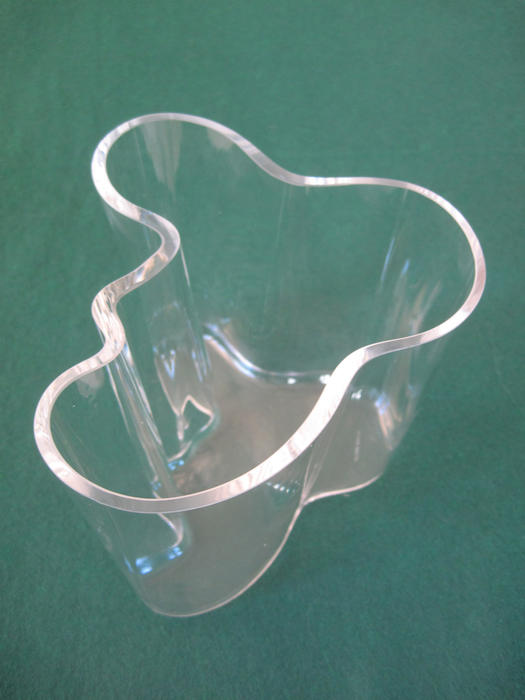
El diseño finlandés es menos conocido que el de otros países europeos, pero ha tenido una fuerte influencia y ha sido el creador de alguno de los objetos más reconocibles de estos 100 años, como este jarrón de cristal fruto de los lápices del arquitecto Alvar Aalto. Fue creado en 1937 como parte de una serie de objetos para el restaurante Savoy y sus formas redondeadas y sencillas han tenido tanto éxito que 79 años después sigue produciéndose y vendiéndose con excelentes cifras

The Finnish design is less well-known than that of other European countries, but there has had a strong influence and has been the creator of some of the most recognizable objects of these 100 years, like this crystal vase a fruit of the pencils of the architect Alvar Aalto. It was created in 1937 like part of a series of objects for the restaurant Savoy and its rounded and simple forms have been successful that 79 years later keeps on taking place and selling with excellent numbers


El hecho de que con pocas modificaciones el Volkwagen Escarabajo estuviese fabricándose desde 1938 hasta 2003 prueba que estamos ante algo más que un modelo de coche, incluso a pesar de las dos "manchas" sobre su nacimiento: era un encargo directo de Hitler y el diseño de Ferdinand Porsche se "inspiró" mucho en un vehículo anterior, el Tatra V570. Sea como sea, el resultado fue un coche barato, funcional, y con un innegable encanto que revolucionó el mercado del automóvil desde que empezó a producirse en masa despues de la IIGM. En 1999 fue designado el "más influyente" del S XX

The fact that with few modifications Volkwagen Escarabajo test was made from 1938 until 2003 that we are before something more than a car model, even in spite of two "spots" on its birth: it was a direct order of Hitler and the design of Ferdinand Porsche "was" "inspired" very much in a previous vehicle, Tatra V570. Be as it is, the result was a cheap, functional car, and with an undeniable delight that revolutionized the market of the motorcar since it began taking place in mass after the IIGM. In 1999 it was designated "more influential" of the XXth century


Aplicar criterios de usabilidad y estética y prever las necesidades de la producción en masa es lo que puede llevar al éxito de un diseño industrial, y es exactamente lo que hizo George G. Blaisdell, el fundador de Zippo, en 1932. Como muchos inventores se inspiró en un objeto anterior pero lo mejoró logrando un encendedor fiable, que no se apaga con el viento y que puede usarse con una sola mano. Como ha ocurrido con otros grandes diseños, se popularizó gracias a su uso en el frente de batalla, en este caso en la II Guerra Mundial, cuando fue tan usado por las tropas norteamericanas que prácticamente toda la producción se destinó al ejército

To apply criteria of usabilidad and esthetics and to foresee the needs for the production in mass is what it can take to the success of an industrial design, and this is exactly what George G did. Blaisdell, the founder of Zippo, in 1932. As many inventors it was inspired in a previous object but it improved it achieving a trustworthy lighter, which does not go out with the wind and which can use with only one hand. Since it has happened with other big designs, it became popular thanks to its use in the front line, in this case in the Second World War, when it was so used by the North American troops that practically the whole production was assined to the army

Friday, 19 February 2016

DISEÑO INDUSTRIAL 1. INDUSTRIAL DESIGN 1

Se podría decir que el diseño industrial ha sido el décimo arte nacido en el S XX: el de aplicar a objetos fabricados en serie no sólo los criterios estéticos y artísticos que antes no se consideraban sino también otros racionales o pensados para que la producción sea más barata o más sencilla. El resultado, en los mejores casos, es un buen número de artículos que en muchas ocasiones han tenido rotundos éxitos de ventas y en no pocos casos han formado parte de nuestras vidas.

It might be said that the industrial design has been the tenth born art in the XXth century: of applying to objects made of series not only the esthetic and artistic criteria that earlier they were not considered but also rational or thought-out others so that the production is cheaper or simpler. The result, in the best cases, is a good number of articles that frequently have had round successes of sales and in not few cases they have been part of our lives. 


A principios del S XX el mercado de Estados Unidos estaba lleno de productos imitando a la Coca-Cola y para los consumidores no era fácil distinguirlos de la verdadera, ya que todos se vendían en botellas muy similares cuyo diseño era decisión exclusiva de la embotelladora y con etiquetas que se imitaban y a menudo se caían. Coca-Cola se decidió a cambiar eso y en 1915 encargó un diseño de botella que iba a ser exclusivo para la marca que empezó a comercializarse en 1916, hace justo un siglo. El primer diseño era bastante más redondeado, como vemos en la imagen de la izquierda, pero se estilizó para adaptarse a las necesidades de producción. Unas décadas después un estudio demostró que menos de un 1% de americanos eran incapaces de reconocer una botella de Coca-Cola por la forma.

At the beginning of the XXth century the market of the United States was full of products imitating the Coca-Cola and for the consumers it was not easy to distinguish them from the real one, since they all were selling in very similar bottles which design was an exclusive decision of the bottling plant and with tags that were imitated and often they were falling down. Coca-Cola decided to change that and in 1915 he entrusted a design of bottle that was going to be exclusive for the mark that begun being commercialized in 1916, it makes one century just. The first design was more rounded enough, as we see in the image of the left, but it was stylized to adapt itself to the needs for production. A few decades later a study demonstrated that less 1 % of Americans was one unable to recognize a bottle of Coca-Cola as the form.


Uno de los ámbitos con los que más se ha relacionado el mundo del diseño industrial ha sido el del mueble y, dentro de este, las sillas han sido en cierto modo un objeto fetiche. Una de las primeras pensada para este tipo de producción masiva fue esta Silla roja y azul diseñada por Gerrit Rietveld en 1917. En un principio tenía otros colores pero e 1923 se pintó tal y como la ven en la imagen para recordar los cuadros de Piet Mondrian. Es, sin duda, uno de los iconos del diseño del S XX

One of the ambiences to which more the world of the industrial design has been related has been that of the furniture and, inside this one, the chairs have been in certain way an object fetish. One of the first ones thought for this type of massive production was this red and blue Chair designed by Gerrit Rietveld in 1917. In the beginning it had other colors but and 1923 made itself up as they see it in the image to remember the pictures of Piet Mondrian. It is, undoubtedly, one of the icons of the design of the XXth century


Si alguna institución ha tenido influencia en estos 100 años de diseño industrial ha sido la Bauhaus alemana, fundada en 1919 por Gropius. Allí nació toda una concepción de la arquitectura y el diseño que ha perdurado mucho más allá de su cierre en 1933 y allí también nació esta Silla Wassily en 1925 de la mano de otro arquitecto: Marcel Breuer. En ella vemos algunos de los rasgos de la Bauhaus: un estilo muy funcional y la mezcla de materiales nuevos como el acero y viejos como el cuero

If some institution has had influence in these 100 years of industrial design it has been the German Bauhaus, founded in 1919 by Gropius. There was born the whole conception of the architecture and the design that has lasted much further of its closing in 1933 and there also this Chair Wassily was born in 1925 of the hand of another architect: Marcel Breuer. In her we see some of the features of the Bauhaus: a very functional style and the miscellany of new materials as the steel and old men as the leather


Otro genio de la Bauhaus, Mies van der Rohe es el responsable de esta Silla Barcelona, uno de los muebles más famosos de todo el S XX. Fue creada para el pabellón alemán de Barcelona en 1928 y en ella llegó a sentarse el rey Alfonso XIII cuando visitó el lugar. Es otro ejemplo de las ideas de la escuela alemana: sencillez, diseño enfocado al uso y mezcla armoniosa de materiales nuevos y viejos, otra vez el acero y el cuero

Another genius of the Bauhaus, Mies van der Rohe is the person in charge of this Chair Barcelona, one of the most famous furniture of the whole XXth century. It was created for the German pavilion of Barcelona in 1928 and in her king Alfonso XIII went so far as to sit down when he visited the place. It is another example of the ideas of the German school: simplicity, design focused on the use and harmonious miscellany of new and old materials, again the steel and the leather


El diseño español también ha marcado época en algunos momentos con objetos admirados en todo el mundo como este sacacorchos diseñado y fabricado por la firma Boj en 1932-33, con esa forma de búho que todos hemos visto en nuestras casas. Se trata de un ejemplo perfecto de la estética y la funcionalidad perfectamente unidas, lo que explique que siga produciéndose y a la venta: por menos de 10 euros pueden tener un hito del diseño en casa

The Spanish design also has marked epoch in some moments with objects admired in the whole world like this corkscrew designed and made by the signature Box in 1932-33, with this form of owl that we all have seen in our houses. One treats as a perfect example of the esthetics and the functionality perfectly joined, what I explained that it should keep on taking place and to the sale: as less than 10 euros they can have a milestone of the design at home

Art Black Side