Siempre me han encantado estos carteles que te dan la bienvenida a cualquier estado norteamericano, tambien los hay de salida cuando te vas....Signo de una educación excelente con el visitante, y símbolo de ese gran país que ha logrado pese a la mezcla de etnias y culturas tan diversas, sentirse unido bajo la misma bandera. Desde aquí mis felicitaciones al pueblo norteamericano
I´ve always loved these cartels that give you the welcome to any North American state, also they are of exit when you go away.... Sign of an excellent education with the visitor, and symbol of this big country that has managed despite the miscellany of ethnic groups and so diverse cultures, to feel joined under the same flag. From here my congratulations to the North American village
Durante siglos, el "kvas", ha sido la bebida preferida de los rusos, durante los sofocantes calores estivales. Literalmente la palabra KVAS, quiere decir "levadura de pan". Se trata de una bebida alcohólica fermentada muy suave, el más fuerte ronda los 2,2 grados de concentración alcohólica, aunque también existen variedades sin alcohol. Su sabor resulta intermedio entre un refresco y la cerveza. Se elabora con harina de centeno y malta, o también con harina de salvado y un poco de pan de centeno.
La mezcla se deja fermentar en agua. Muchas veces durante el proceso se le pueden añadir frutas, por eso gracias a las levaduras que se usan en la fermentación, el Kvas es una excelente fuente de vitamina B. La peculiaridad de esta bebida en la gastronomía rusa, es que se emplea también como base líquida para cocinar, una sopa de verano tradicional llamada OKROSHKA, La cual se sirve siempre fria.
Para preparar "okróshka", se necesitan pepinos, rabanítos,
cebolla verde, un poco de eneldo o perejil, el cual se lava y se corta en pedacitos. Luego se le añaden los ingredientes cocidos, pero ya enfriados, un par de huevos, patatas y carne, y por supuesto el Kvas. Se toma fria con "smetana", una especie de nata agria, mayonesa o nata. El nombre "okroshka", proviene de la palabra rusa, que significa desmenuzado en pequeños pedazos.
Hoy en día la fabricación del Kvas en Rusia, se ha desarrollado en una industria que genera miles de millones de rublos. La fermentación se realiza en tanques de 250.000 litros. Después de pasar allí dos días, el kvas es enviado a la planta de embotellamiento. La versión sin alcohol, se produce en las cervecerías mas famosas del país.
For centuries, the "kvas", has been the favorite drink of the Russians, during the stifling summer heats. Literally the word KVAS, it means "yeast of bread". It is a question of a very soft fermented alcoholic beverage, stronger round 2,2 grades of alcoholic concentration, although also varieties exist without alcohol. Its flavor turns out to be intermediate between a refreshment and the beer. It is prepared by flour of rye and malt, or also by bran flour and a little of rye bread.
The miscellany one allows to ferment in water. Often during the process fruits can be added to him, that's why thanks to the yeasts that are used in the fermentation, the Kvas is an excellent vitamin source B. The peculiarity of this drink in the Russian gastronomy, is that it is used also like liquid base to cook, a soup of traditional summer called OKROSHKA, Which makes use always cold.
To prepare "okróshka", cucumbers are needed, rabanítos, green onion, a little of dill or parsley, which washes itself and is cut in pedacitos. Then there are added to him the cooked, but already cooled ingredients, a pair of eggs, potatoes and meat, and of course the Kvas. It takes cold with "smetana", a species of sour cream, mayonnaise or cream. The name "okroshka", it comes from the Russian word, which it means crumbled in small pieces.
Nowadays the manufacture of the Kvas in Russia, has developed in an industry that generates thousands of million roubles. The fermentation is realized in 250.000 liters tanks. After spending there two days, the kvas is sent to the bottling plant. The version without alcohol, takes place in the most famous breweries of the country.
Key, familia de pintores flamencos mejor conocidos por su arte de retratar. Willem Key (c. 1515-68) era un alumno de Lambert Lombard c. 1540 en Liège. En 1542 se hizo maestro del Gremio de Antwerp, donde gastó el resto de su vida laboral. Su sobrino, Adriaen Thomasz. Key (c. 1544 - después de 1589), era probablemente su alumno. Éste se hizo maestro del Gremio de Antwerp en 1568. Ambos artistas muy se consideraron en su día e hicieron retratos asegurados y sólidos de personas famosas. Sus trabajos religiosos son menos conocidos, y se conoce que muchos de Willem han acabado en las manos de iconoclastas.
Key, family of Flemish painters better known by its art of painting
PORTRAIT OF A LADY
the portrait. Willem Key (c. 1515-68) was a pupil of Lambert Lombard c. 1540 in Liège. In 1542 there was done a teacher of the Union of Antwerp, where it spent the rest of its labor life. Its nephew, Adriaen Thomasz. Key (c. 1544 - after 1589), he was probably its pupil. This one became a teacher of the Union of Antwerp in 1568. Both artists much thought in due time and did insured and solid portraits of famous persons. Its religious works are less well-known, and it is known that many of Willem have died in the iconoclasts' hands.
El amor es la mejor música en la partitura de la vida, sin él, siempre serás un eterno desafinado en el inmenso coro de la humanidad, porque el tiempo es muy lento para los que esperan, muy rápido para los que tienen miedo, muy largo para los que se lamentan, muy corto para los que festejan. Pero para los que aman el tiempo es una eternidad.
The love is the best music in the score of the life, without him, you will always be an eternal flat one in the immense choir of the humanity, because the time is very slow for those who wait, very rapid for those who are afraid, very long for those who complain, very shortly for those that they celebrate. But for those who love the time it is an eternity.
Любовь - лучшая музыка в партитуре жизни, без него, всегда ты будешь вечным фальшивым в огромном хоре человечества, потому что время очень медленное для тех, которые ждут, очень быстрое для тех, которые боятся, очень длинный для тех, кто жалуются, очень коротко для тех, которых они пируют. Но для тех, которые любят время, это вечность.
Si
pensamos en Action Painting y sabemos un poco de inglés podremos decir que
significa Pintura en Acción y deducir un poco sobre lo que se trata, pero
llegar a la profundidad y al importantísimo significado emocional de esta
corriente pictórica es imposible que lo hagamos. Es por esto que presentamos
este trabajo, para mostrar esta corriente pictórica poco conocida, espontánea y
abstracta.
El Action
Painting significa en español “Pintura de Acción” y es una corriente pictórica
abstracta de carácter gestual que adoptaron varios miembros de la escuela
estadounidense del expresionismo abstracto. Desde el punto de vista técnico,
consiste en salpicar con pintura la superficie de un lienzo de manera
espontánea y enérgica, es decir, sin un esquema prefijado, de forma que éste se
convierta en un “espacio de acción” y no en la mera reproducción de la
realidad. A veces se utiliza incorrectamente como sinónimo del propio
expresionismo abstracto, aun cuando muchos de los artistas pertenecientes a
esta escuela jamás emplearon dicha técnica.
El Action
Painting tiene sus orígenes en las creaciones automáticas de los surrealistas;
por ejemplo, los dibujos y pinturas de arena de André Masson. Sin embargo, la
diferencia real entre ambos movimientos no es tanto la técnica como el
planteamiento inicial: bajo la influencia de la psicología Freudiana, los
realistas mantenían que el arte automático era capaz de desbloquear y sacar a la luz la mente
inconsciente.
En
el artículo “The american Action Painters”(1952) en el que utilizaban por
primera vez la expresión “Action Painting”, Rosenberg describía tal actitud en
los siguientes términos “En un momento dado, un pintor estadounidense tras otro
empezaron a contemplar el lienzo como un campo de juego en el que reproducir,
rediseñar, analizar o expresar un objeto real o imaginario”.
La estética del Action Painting ponía el énfasis en
el propio acto de pintar, al margen de cualquier aspecto expresivo o
representativo que pudiera poseer. Simplemente reflejaba un instante de la vida
del artista, uno de sus actos y, por consiguiente, un elemento único de la
biografía de éste. Era la expresión de la personalidad, de las emociones del
creador de una manera muy primaria y básica. En el artículo “The American
Action Painters” (ARTnews, diciembre 1952), en el que se utilizaba por
primera vez la expresión Action Painting,
Rosenberg describía tal
actitud en los siguientes términos: “En un momento dado, un pintor
estadounidense tras otro comenzaron a contemplar el lienzo como un campo de
juego en el que actuar, más que un espacio en el que reproducir, rediseñar,
analizar o ‘expresar’ un objeto, real o imaginario. Lo que había que plasmar en el lienzo no era una imagen sino un suceso”.
Consecuentemente, tales obras se entendieron a menudo en términos muy
formalistas como el mero resultado del encuentro entre un artista y sus
materiales.
Forzosamente, el Action Painting convirtió en
redundantes ciertas prácticas artísticas tradicionales: por ejemplo, la idea de
un boceto dejó de tener sentido ya que podría sugerir que el artista intentaba
transferir una cierta imagen predeterminada a la obra final y definitiva.
Este arte ejerció influencia sobre muchos artistas
europeos, generando movimientos paralelos como el tachismo, practicado por
artistas como el francés George Mathieu. El Action Painting también
afectó a otros aspectos del arte moderno, principalmente a la idea de que una
obra de arte debía exhibir claramente la impronta de su proceso creativo.
Los principales representantes de este arte son: Arshile
Gorky, Hans Hofmann, Robert Motherwell, Franz Kline, Willem de Kooning (que fue
el único que esbozó figuras) y el mayor representante de todos: Jackson
Pollock.
Los principales materiales utilizados en este arte son:
pinceles (no para utilizarlos en forma normal), tela, pintura, tarros,
bombillas, en general todo lo que pueda crear un arte abstracto y espontáneo.
Dripping
Consiste en
derramar pintura sobre una tela colocada en el suelo mediante un movimiento
semiautomático sometido casi únicamente a las reglas del azar.
Se
utiliza un bote agujereado en cuyo interior se vierte la pintura. Estas
pinturas expresan los sentimientos internos del artista. Esta
técnica fue creada por Jackson Pollock.
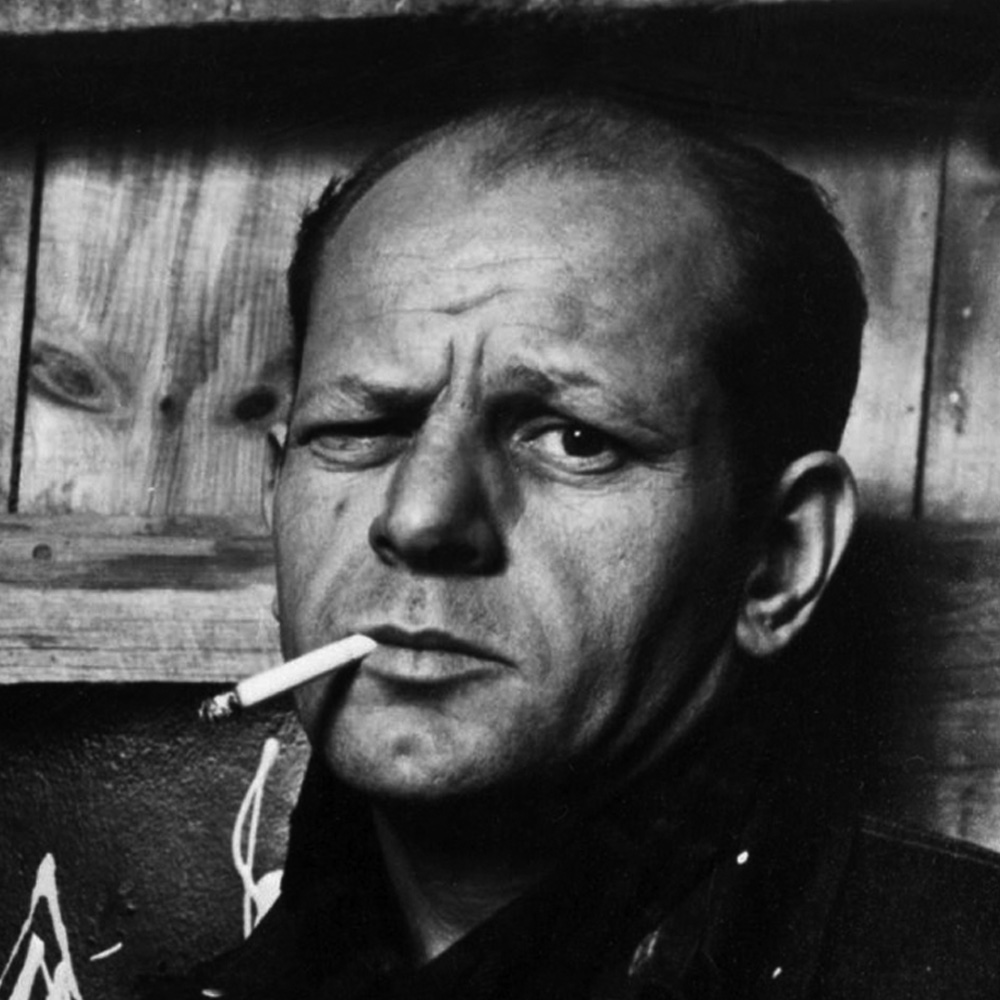
JACKSON POLLOCK
Jackson Pollock, el creador y
mayor representante del Action Painting, nació en Cody, Wyoming, Estados Unidos
en 1912 y estudió en la Art Students League de Nueva York con Thomas Hart
Benton. Estuvo varios años viajando por el país y dibujando. A finales 1930 y
1940 colaboró en Nueva York en los Proyectos de la Administración para el
Federal Art Project (proyecto de artes federales). Sus primeras obras, en el
estilo más libre y abstracto, como en La Loba (1943, Museo de Arte Moderno,
Nueva York)
A partir de 1947 Pollock evolucionó hacia el
expresionismo abstracto, desarrollando la técnica de la action-painting o
dripping, consistente en derramar, dejar gotear o lanzar pintura sobre lienzos
sin tensar colocada en el suelo, por medio de palos y cucharas, en lugar de los
tradicionales pinceles. Mediante este método Pollock realizó esquemas de formas
entrelazadas como se observa en los ejemplos Full fathom five y Lucifer
(ambas de 1947, Museo de Arte Moderno, Nueva York).
También pertenece a esta
época Marrón y plata I (1951, Museo Thyssen-Bornemisza, Madrid). A partir de
1950 su estilo cambió de nuevo, retomando la figuración en blanco y negro,
dentro de un estilo muy virtuosista. Entre las pinturas de su último periodo
destaca Ocean grayness (1953, Museo Salomon R. Guggenheim, Nueva York).
Murió el 11 de agosto de 1956 a consecuencia
de un accidente de automóvil.
Es importante destacar que el fue uno de los
pintores que introdujo las más profundas cambios al arte de mediados de siglo
En la siguiente obra
de Pollock, Guardians of the Secret (Guardianes del Secreto) nos damos
cuenta que en su arte en un comienzo, no utilizaba demasiado su técnica
característica, el dripping . Actualmente esta obra se encuentra, como
otras del autor, en el Museo de Arte Moderno, en San Francisco, Estados Unidos.
If we think about Action Painting and know a little of English we will be able to say that it means Painting in Action and to deduce a little on what it talks each other, but to come to the depth and to the most important emotional meaning of this pictorial current is impossible that we do it. That's why we present this work, to show this slightly well-known, spontaneous and abstract pictorial current.
Action Painting means in Spanish “Painting of Action” and it is an abstract pictorial current of character gestual that there adopted several members of the American school of the abstract expressionism. From the technical point of view, it consists of splashing with painting the surface of a linen of a spontaneous and energetic way, that is to say, without a prearranged scheme, so that this one turns into a “space of action” and not into the mere reproduction of the reality. Sometimes it is used incorrectly how synonymous of the proper abstract expressionism, even if many of the artists belonging to this school never used the above mentioned skill.
Action Painting has its origins in the automatic creations of the surrealists; for example, the drawings and sand paintings of André Masson. Nevertheless, the real difference between both movements is not both the skill and the initial exposition: under the influence of the Freudian psychology, the realists were maintaining that the automatic art was capable of unblocking and of extracting to the light the unconscious mind.
In the article “The american Action Painters” (1952) in which they were using for the first time the expression “Action Painting“, Rosenberg was describing such an attitude in the following terms “In a given moment, an American painter after other they began contemplating the linen as a field in which to reproduce, re-designing, analyzing or expressing a real or imaginary object”.
The esthetics of Action Painting were putting the emphasis on the proper act of doing, to the margin of any expressive or representative aspect that it could possess. Simply it was reflecting a moment of the life of the artist, one of its acts and, consequently, the only element of the biography of this one. It was the expression of the personality, of the emotions of the creator of a very primary and basic way. In the article “The American Action Painters” (ARTnews, December, 1952), in which the expression Action Painting was used for the first time,
Rosenberg was describing such an attitude in the following terms: "In a given moment, an American painter after other they began to contemplate the linen as a field in which to act, more than a space in which to reproduce, re-design, analyze or 'express' an object, real or imaginary. What it was necessary to capture in the linen was not an image but an event”. Consistently, such works were understood often in very formalist terms like the mere result of the meeting between an artist and its materials.
Necessarily, Action Painting turned in redundant certain traditional
artistic practices: for example, the idea of a sketch stopped making sense since he might suggest that the artist was trying to transfer a certain image predetermined to the final and definitive work.
This art influenced on many European artists, generating parallel movements as the tachismo practised by artists like the Frenchman George Mathieu. Action Painting also affected to other aspects of the modern art, principally to the idea of that a work of art had to exhibit clearly the stamp of its creative process.
The main representatives of this art are: Arshile Gorky, Hans Hofmann, Robert Motherwell, Franz Kline, Willem de Kooning (that was the only one that outlined figures) and the biggest representative of all: Jackson Pollock. The main materials used in this art are: brushes (not there uses in normal form), cloth, painting, pots, his bulbs, in general everything what could create an abstract and spontaneous art.
Dripping
He consists of spilling painting on a cloth placed in the soil by means of a semiautomatic movement submitted almost only to the rules of the hazard.
A boat pierced in whose interior is used the painting is spilled. These paintings express the internal feelings of the artist. This skill was created by Jackson Pollock.
JACKSON POLLOCK
Jackson Pollock, the creative and biggest representative of Action
Painting, was born in Cody, Wyoming, the United States in 1912 and studied in Art Students League of New York with Thomas Hart Benton. It was several years traveling round the country and drawing. To ends 1930 and 1940 collaborated in New York in the Projects of the Administration for Federal Art Project (project of federal arts). Its first works, in the freest and abstract style, as in The Wolf (1943, Modern Art museum, New York)
From 1947 Pollock evolved towards the abstract expressionism, developing the skill of the action-painting or dripping, consistent in spilling, allowing to drip or throw painting on linens without tightening placed in the soil, by means of sticks and spoons, instead of the traditional brushes. By means of this method Pollock it realized schemes of interlaced forms as it is observed in the examples Full fathom five and Lucifer (both of 1947, Modern Art museum, New York).
Also it belongs to this Brown epoch and silver I (1951, Museum Thyssen-Bornemisza, Madrid). From 1950 its style changed again, recapturing the black and white imagining, inside a style much virtuosista. Between the paintings of its last period there stands out Ocean grayness (1953, Museum Salomon R. Guggenheim, New York).
He died on August 11, 1956 as a consequence of a motorcar accident.
It is important to emphasize that the fue one of the painters who introduced the deepest changes to the art of middle of century